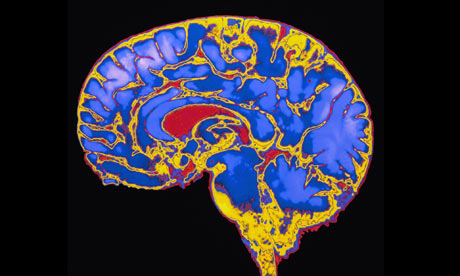
Whether we describe it as right vs. left brain, discriminating vs. intuitive
mind or thinking/analytical/rational vs. intuitive mind; we are talking about
dual-process models. Dual process models of human thinking are becoming
more widely accepted in contemporary mainstream psychology. Here is a
summary of differences between intuitive and analytical thinking.13
Unconscious Intuitive Thinking
*Fast and effortless
*Process is unintentional and is automatically cued. This evidences an absence of personal ‘will.’
*Process is generally inaccessible,only results show up consciously.
*Pattern matching, thought is metaphorical, holistic.
*Common to all mammals.
*Context dependent.
*Platform dependent — i.e.inclusive to the brain and body that houses it.
*Process is generally inaccessible,only results show up consciously.
*Pattern matching, thought is metaphorical, holistic.
*Common to all mammals.
*Context dependent.
*Platform dependent — i.e.inclusive to the brain and body that houses it.
Conscious Analytical Thinking
*Slow and effortful.
*Process is intentional and is consciously controlled — an exercise of ‘free will.’
*Entire process can be controlled and viewed in consciousness.
*Symbol manipulation, thought is truth preserving, analytical.
*Unique to humans over age 2 and perhaps some language-trained apes.
*Context independent.
*Platform independent — processes can be transmitted to other rule following organisms or machines. In other words, experiences can be easily communicated to others. The information is ‘portable.’
*Process is intentional and is consciously controlled — an exercise of ‘free will.’
*Entire process can be controlled and viewed in consciousness.
*Symbol manipulation, thought is truth preserving, analytical.
*Unique to humans over age 2 and perhaps some language-trained apes.
*Context independent.
*Platform independent — processes can be transmitted to other rule following organisms or machines. In other words, experiences can be easily communicated to others. The information is ‘portable.’
Psychologists say that the intuitive aspect of thinking appears to be
evolutionarily older and more established than the analytical aspect. Many
mammals demonstrate experience-based emotionally-related judgments,
but few if any demonstrate analytical reasoning like humans.14 In addition,
human infants clearly develop their ability to make experience-based emo-
tionally-related judgments well before they develop analytical abilities.15
In evolutionary terms analytical thinking appears to be still in a rel-
atively embryonic stage of development compared to intuitive thinking.
Intuitive learning, then, may be the default style of human learning.16 While
the words used in the dual process models imply that intuitive thinking is
unconscious, as compared with the conscious, this may not be completely
accurate. According to Guidano, it might be more accurate to refer to intui-
tive thinking processes as ‘superconscious...because they govern conscious
processes without appearing in them.
evolutionarily older and more established than the analytical aspect. Many
mammals demonstrate experience-based emotionally-related judgments,
but few if any demonstrate analytical reasoning like humans.14 In addition,
human infants clearly develop their ability to make experience-based emo-
tionally-related judgments well before they develop analytical abilities.15
In evolutionary terms analytical thinking appears to be still in a rel-
atively embryonic stage of development compared to intuitive thinking.
Intuitive learning, then, may be the default style of human learning.16 While
the words used in the dual process models imply that intuitive thinking is
unconscious, as compared with the conscious, this may not be completely
accurate. According to Guidano, it might be more accurate to refer to intui-
tive thinking processes as ‘superconscious...because they govern conscious
processes without appearing in them.

No comments:
Post a Comment